

Oil Prices Plunge Over 4% as US-Iran Peace Deal Reopens Strait of Hormuz
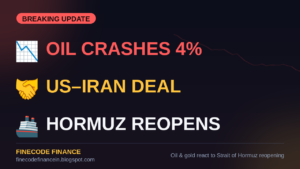
Global oil prices fell sharply after the United States and Iran announced a preliminary peace agreement aimed at ending months of conflict and restoring commercial traffic through the Strait of Hormuz. The development triggered a rapid selloff in crude oil markets as traders moved to remove the geopolitical risk premium that had supported prices during the conflict.
Brent crude dropped to around $84 per barrel, while US benchmark WTI crude slipped below $81 per barrel. The decline represents one of the biggest single-day moves in recent months and reflects growing confidence that energy supplies from the Gulf region could begin normalizing. (Reuters)
Why Oil Prices Fell So Quickly
For months, energy markets had priced in the risk of supply disruptions due to tensions surrounding the Strait of Hormuz, one of the world’s most important oil transit routes.
However, the latest agreement between Washington and Tehran includes plans to reopen the Strait and gradually restore normal shipping activity. As a result, traders immediately reduced expectations of future supply shortages, pushing oil prices sharply lower. (Reuters)
Furthermore, reports suggest that future negotiations may include sanctions relief and measures designed to increase Iranian oil exports. If implemented, additional crude supply could further ease pressure on global energy markets. (Reuters)
Why the Strait of Hormuz Matters
The Strait of Hormuz is one of the most strategically important energy corridors in the world. A significant portion of global oil and liquefied natural gas shipments passes through this narrow waterway.
Therefore, any disruption in the region can quickly trigger spikes in energy prices, inflation concerns, and market volatility. Conversely, reopening the route improves confidence in global energy supply chains and reduces fears of prolonged shortages. (Reuters)
Impact on Global Markets
Lower oil prices are generally viewed as positive for the broader economy.
Reduced energy costs can help lower transportation expenses, manufacturing costs, and inflation pressures. Consequently, investors often see falling oil prices as supportive for economic growth and corporate profitability.
Meanwhile, global equity markets responded positively as investors welcomed the prospect of lower inflation and improved energy security. The agreement also strengthened expectations that central banks may face less pressure to maintain restrictive monetary policies. (Business Insider)
What This Means for India
For India, falling crude oil prices are particularly significant.
India imports the majority of its crude oil requirements, meaning lower oil prices can directly benefit the economy through:
- Reduced import costs
- Lower inflation pressure
- Improved fiscal outlook
- Stronger rupee stability
- Better profitability for oil-consuming industries
Moreover, sectors such as aviation, paints, chemicals, logistics, and consumer goods often benefit when crude oil prices decline.
Therefore, sustained weakness in oil prices could provide a supportive backdrop for Indian equity markets in the coming weeks.
What Investors Should Watch Next
Investors should closely monitor:
- Official signing of the US-Iran agreement
- Progress in reopening the Strait of Hormuz
- Future sanctions relief for Iran
- Global oil inventory trends
- Central bank policy decisions
However, geopolitical risks have not completely disappeared. Any setback in negotiations or renewed tensions could quickly bring volatility back to energy markets. (Reuters)
FineCode Finance AI Analysis
The sharp decline in crude oil prices suggests that markets are rapidly adjusting to a lower-risk geopolitical environment. The reopening of the Strait of Hormuz has the potential to improve global energy flows, reduce inflation concerns, and support economic activity worldwide.
From an Indian market perspective, lower oil prices are generally bullish because they reduce external pressure on the economy and improve the outlook for inflation-sensitive sectors.
If the peace process continues and oil prices remain under control, investor sentiment toward emerging markets, including India, could improve further. Nevertheless, market participants should remain alert because geopolitical agreements often face implementation challenges after initial announcements.
Disclaimer
This article is for informational and educational purposes only and should not be considered investment, financial, legal, or professional advice. The views expressed are based on publicly available information and market developments at the time of publication. Investors should conduct their own research and consult qualified financial advisors before making investment decisions. FineCode Finance AI shall not be responsible for any financial losses arising from the use of information contained in this article.


[…] Therefore, the combination of central bank decisions and geopolitical developments could play a significant role in determining market direction over the coming weeks. https://finecodefinanceai.com/crude-oil-prices-plunge-over-4-as-us-iran-peace-deal-reopens-strait-of… […]