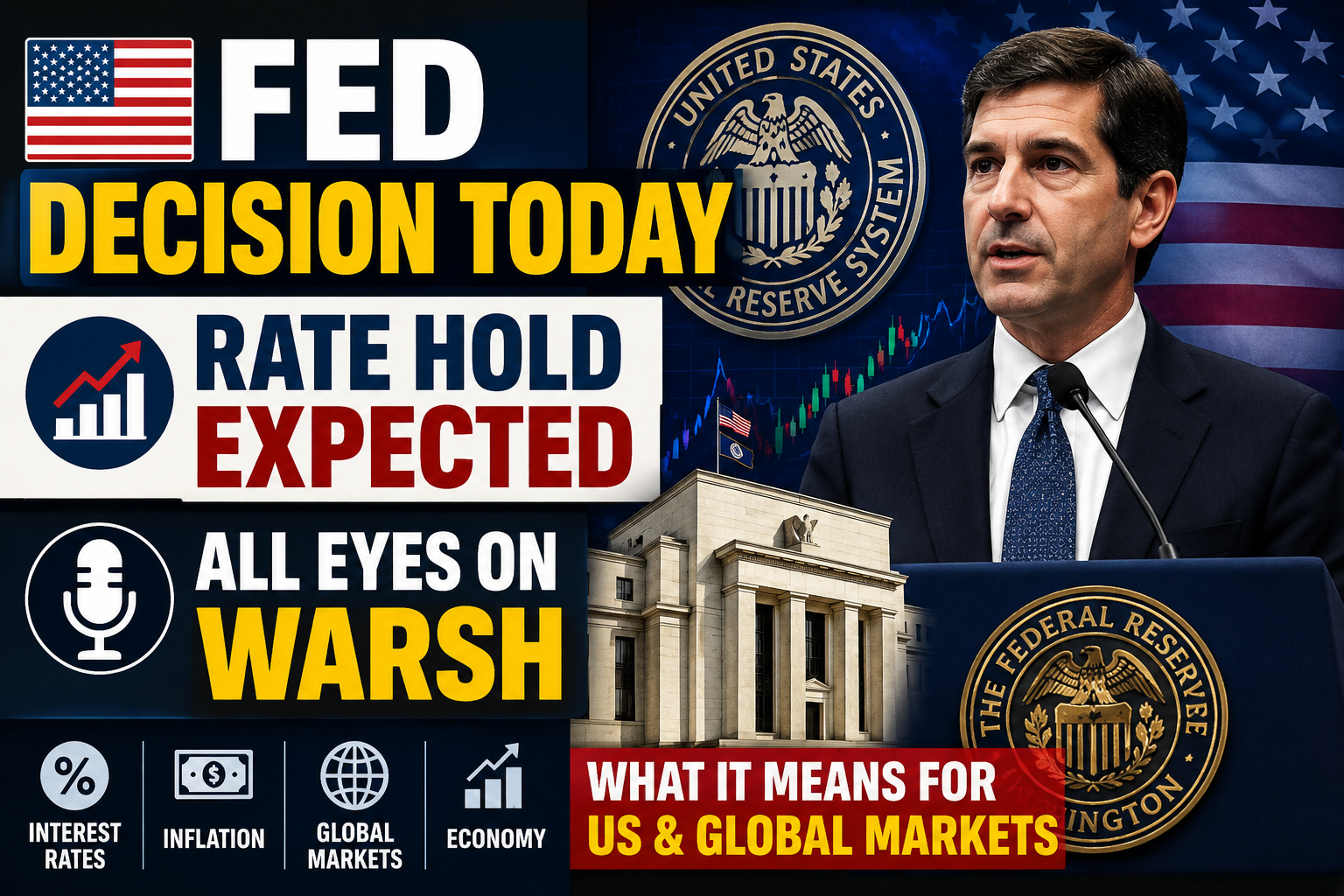
Fed Rate Decision 2026: Why Global Markets Are Focused on Kevin Warsh’s First FOMC Meeting

Fed Rate Decision 2026: Why Global Markets ?
Global financial markets are closely monitoring the June Federal Reserve meeting as policymakers prepare to announce their latest interest rate decision. While investors largely expect the Fed to leave rates unchanged, the real focus is on what comes next and how new Federal Reserve Chair Kevin Warsh plans to guide monetary policy.
Market expectations currently suggest that the Federal Reserve will maintain its benchmark interest rate within the 3.50% to 3.75% range. However, traders, economists, and investors are paying greater attention to the Fed’s economic projections, policy language, and Warsh’s first official press conference as Chair.
Why This Meeting Matters
The June meeting marks Kevin Warsh’s first Federal Open Market Committee (FOMC) meeting as Federal Reserve Chair. Although a rate hold is widely expected, investors want answers to several critical questions:
- Will the Fed signal future rate cuts?
- Has inflation become a bigger concern?
- How does Warsh view the economic outlook?
- Could policymakers adopt a more hawkish stance?
The answers could significantly influence stock markets, bond yields, currencies, and investor sentiment worldwide.
Inflation Remains a Key Concern
Despite some improvement in energy prices and easing concerns around crude oil markets, inflation remains above the Federal Reserve’s long-term target. Strong labor market conditions and resilient consumer spending continue to complicate the central bank’s decision-making process.
As a result, many analysts believe the Fed may adopt a cautious approach and avoid giving strong signals about future rate cuts.
Impact on Global Markets
The Federal Reserve’s decisions extend far beyond the United States.
A hawkish policy stance could strengthen the US dollar, influence global capital flows, and create volatility across emerging markets. On the other hand, a more accommodative tone could support risk assets, including equities, commodities, and emerging market currencies.
Investors in Europe, Asia, and emerging economies are closely watching the outcome because US monetary policy often shapes global investment trends.
What Does It Mean for India?
For Indian markets, the Fed’s policy outlook remains highly relevant.
A stable or dovish Fed stance could support foreign institutional investment flows into emerging markets, including India. Sectors such as banking, technology, and capital markets may benefit from improved global risk sentiment.
However, if the Fed signals a longer period of elevated interest rates, global investors may become more cautious, potentially affecting capital flows into emerging markets.
FineCode Finance AI Analysis
The June FOMC meeting is not simply about whether interest rates change today. The bigger story is the future direction of US monetary policy under Kevin Warsh’s leadership.
Markets are looking for clues about inflation, economic growth, and future rate expectations. While a rate hold appears highly likely, the tone of the Fed’s statement and Warsh’s commentary could become the primary drivers of market movement over the coming weeks.
For investors worldwide, including those in India, this meeting could provide important signals regarding global liquidity, risk appetite, and future market trends.
https://finecodefinanceai.com/global-markets-rally-oil-prices-ease-fed-policy-india/?amp=1
Source: Economic Times Live Blog, Federal Reserve communications, Reuters reports.
Disclaimer: This article is for informational and educational purposes only and does not constitute investment advice.