

India’s Wholesale Inflation Hits 9.68% in May as Rising Oil Costs Add Pressure
India Wholesale Inflation May 2026
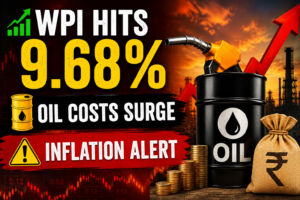
India’s wholesale inflation accelerated sharply to 9.68% in May under the revised Wholesale Price Index (WPI) series, highlighting the growing impact of higher energy and commodity prices on the economy. The increase comes at a time when policymakers are already monitoring inflation risks linked to global geopolitical tensions, volatile crude oil prices, and weather-related uncertainties. (Trading Economics)
The latest data suggests that rising fuel and manufacturing costs are increasingly passing through the supply chain. While retail inflation remains below the Reserve Bank of India’s target threshold, wholesale inflation often acts as an early indicator of future price pressures in the broader economy. (Reuters)
Why Wholesale Inflation Is Rising
The primary driver behind the surge in wholesale inflation has been the sharp increase in energy-related costs.
During recent months, global oil markets experienced significant volatility due to geopolitical tensions in West Asia. Higher crude oil prices increased transportation, logistics, manufacturing, and input costs for businesses across multiple sectors. As a result, producers have been forced to absorb or pass on part of these higher expenses. (Reuters)
Furthermore, rising prices of industrial commodities, chemicals, metals, and manufactured products have contributed to broader inflationary pressures within the wholesale segment. (The Economic Times)
Why Investors Should Pay Attention
Wholesale inflation does not directly affect consumers in the same way as retail inflation. However, it provides valuable insight into future pricing trends.
If businesses continue facing higher input costs, some of these costs may eventually be passed on to consumers. Consequently, retail inflation could move higher in the coming months, potentially influencing monetary policy decisions and corporate profitability. (Reuters)
Higher inflation can also impact company margins, particularly in sectors where businesses struggle to pass increased costs to customers.
Impact on Indian Stock Market
The inflation data is generally viewed as a cautious signal for equity markets.
Potentially Negative For
- FMCG companies facing higher input costs
- Consumer goods manufacturers
- Logistics and transportation businesses
- Companies with weak pricing power
Potentially Positive For
- Energy producers
- Commodity-linked businesses
- Select upstream oil and gas companies
However, investors should note that markets typically react not only to inflation data itself but also to expectations regarding RBI policy, crude oil prices, and economic growth. (Reuters)
What This Means for RBI
The Reserve Bank of India will closely monitor whether higher wholesale inflation eventually translates into broader consumer inflation.
Recent retail inflation data remains close to the RBI’s target range, but continued pressure from oil prices, food costs, and currency movements could complicate the inflation outlook. Therefore, future policy decisions may increasingly depend on how these risks evolve. (Reuters)
What Investors Should Watch Next
Investors should focus on:
- Crude oil prices
- Future WPI and CPI inflation readings
- Rupee-dollar movement
- Monsoon progress
- RBI policy commentary
Moreover, the recent decline in oil prices following signs of a potential US-Iran breakthrough could provide some relief if sustained. Lower energy costs may help reduce inflation pressures during the coming months. (Reuters)
FineCode Finance AI Analysis
The jump in wholesale inflation to 9.68% represents a warning sign rather than an immediate crisis for Indian markets.
The biggest risk remains energy prices. If crude oil stays under control and geopolitical tensions continue to ease, inflation pressures could moderate in the second half of the year. However, a renewed surge in oil prices or a weaker rupee could quickly reverse that trend.
For investors, this data is mildly negative in the short term because it highlights cost pressures within the economy. Nevertheless, the broader market outlook will continue to depend on oil prices, inflation trends, RBI policy decisions, and economic growth momentum.
Possible Market Impact
- Nifty: -0.20% to -0.60%
- Sensex: -150 to -450 points
- Bank Nifty: -100 to -300 points
Current Sentiment: Moderately Negative (6/10 Risk Level)
Disclaimer
Disclaimer: This article is for informational and educational purposes only and does not constitute investment, financial, legal, or professional advice. Readers should conduct their own research before making any investment decisions.


[…] https://finecodefinanceai.com/india-wholesale-inflation-may-2026/?amp=1 […]