
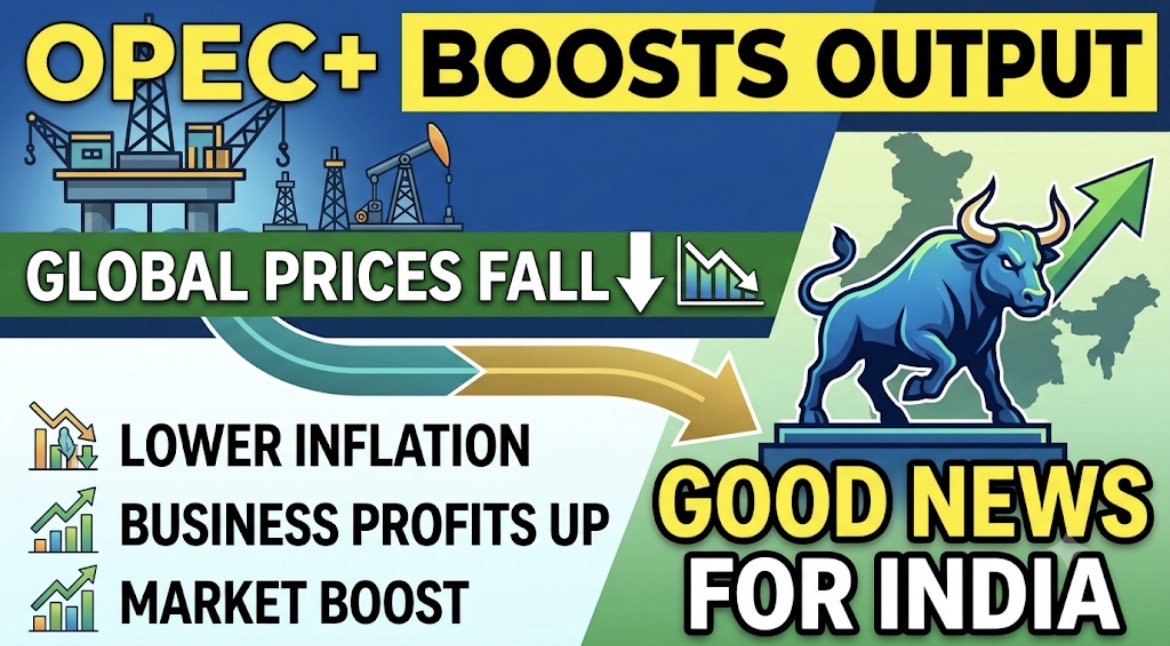

OPEC+ Increases Oil Output Again: Why This Could Be Good News for India’s Stock Market
The global oil market has entered the week with an important development that could influence not just crude oil prices but also the Indian economy and stock market.
OPEC+, the alliance of major oil-producing countries led by Saudi Arabia and Russia, has agreed to increase its oil production target by 188,000 barrels per day (bpd) for August 2026. While the announcement may seem like a routine supply adjustment, its implications are significant—especially for countries like India that rely heavily on imported crude oil.
For investors, this raises an important question: Is this development positive or negative for the Indian stock market?
Why Did OPEC+ Increase Production?
OPEC+ has been gradually restoring oil production after earlier output cuts. The latest increase reflects the group’s confidence that the global market can absorb additional supply without creating a major imbalance.
The decision also comes as concerns over immediate supply disruptions in the Middle East have eased compared with recent weeks. Although geopolitical risks have not disappeared completely, the energy market is showing signs of becoming more stable.
In simple terms, more supply generally reduces the pressure on oil prices, provided global demand remains steady.
Why Is This Important for India?
India imports around 85% of its crude oil requirement, making international oil prices one of the most important factors affecting the country’s economy.
When crude oil prices remain stable or move lower, India benefits in several ways.
Lower oil prices reduce the country’s import bill, ease inflation, improve the current account balance and support economic growth. Businesses that consume fuel or petroleum-based raw materials also enjoy lower operating costs, which can improve profitability.
This is one of the reasons why Indian equity markets generally react positively when global crude prices soften.
Which Sectors Could Benefit the Most?
Several sectors stand to gain if crude oil remains under control.
Oil Marketing Companies
HPCL, BPCL and IOC are among the biggest beneficiaries because lower crude prices can improve refining and marketing margins.
Aviation
Fuel accounts for a significant portion of airline operating costs. Stable or lower crude prices can directly improve profitability for aviation companies.
Paints and Chemicals
Many raw materials used in these industries are derived from crude oil. Lower input costs can support margins.
Logistics and Transportation
Lower diesel prices reduce operating expenses for logistics companies, transport operators and supply chains.
Automobile Sector
Reduced transportation costs and improved consumer sentiment can indirectly support automobile manufacturers.
Which Companies Could Face Pressure?
Not every company benefits from lower oil prices.
Upstream oil producers such as ONGC and Oil India generally earn more when crude prices are high. If oil prices remain under pressure because of increased supply, investor sentiment towards these companies may soften.
Possible Impact on Nifty and Bank Nifty
If there are no major geopolitical surprises before the next trading session, the latest OPEC+ decision could provide a modest positive boost to Indian equities.
Estimated Market Impact
- Nifty 50: +0.20% to +0.50% (approximately 50–130 points)
- Bank Nifty: +0.15% to +0.45% (approximately 100–300 points)
- Sensex: +0.20% to +0.45% (approximately 180–450 points)
These estimates assume that Brent crude remains stable and global markets do not witness any unexpected volatility.
What Are the Risks?
While the overall outlook has improved, investors should remain cautious.
The Strait of Hormuz remains one of the world’s most critical energy shipping routes. Any fresh geopolitical tension, disruption in oil transportation or unexpected supply shock could quickly push crude prices higher and reverse the current positive sentiment.
This is why investors should continue monitoring oil prices alongside global market developments.
Final Verdict
From an Indian perspective, the latest OPEC+ production increase is largely a positive development.
Lower or stable crude oil prices support economic growth, help control inflation and improve the earnings outlook for several sectors. Oil marketing companies, aviation, logistics, paints and chemicals are likely to be among the biggest beneficiaries, while upstream oil producers may face relatively weaker sentiment.
Overall, the current global backdrop suggests a mildly bullish outlook for the Indian stock market, provided there are no fresh geopolitical disruptions before trading begins.
Disclaimer: This article is intended for educational and informational purposes only. The views expressed are based on publicly available information and market analysis. Investors should conduct their own research or consult a qualified financial advisor before making investment decisions.


[…] https://finecodefinanceai.com/opec-increases-oil-output-again-why-this-could-be-good-news-for-indias… […]