
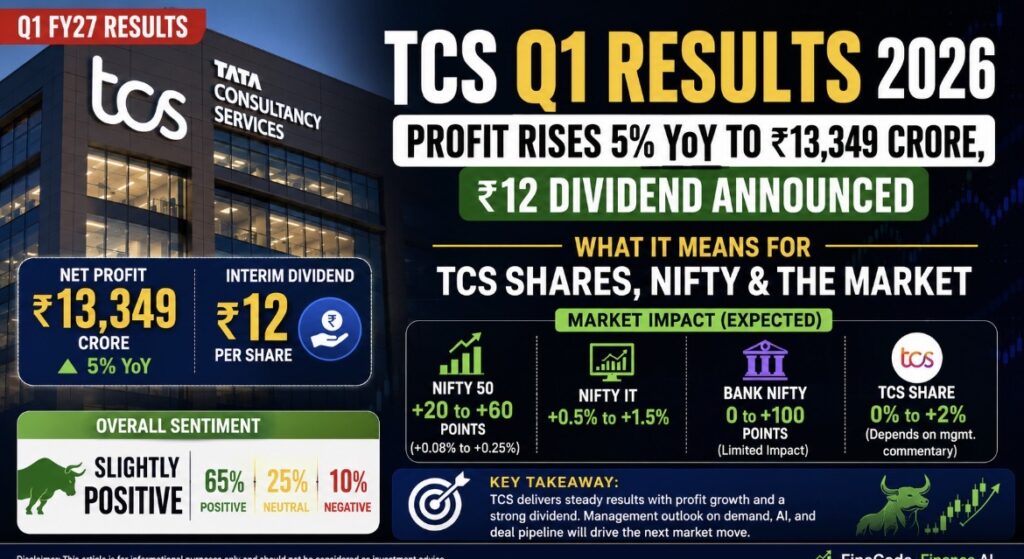
TCS Q1 Results 2026: Profit Rises 5% YoY to ₹13,349 Crore, ₹12 Dividend Announced – What It Means for the Indian Stock Market
India’s largest IT services company, Tata Consultancy Services (TCS), has kicked off the Q1 earnings season with a steady set of results. The company reported a 5% year-on-year increase in consolidated net profit to ₹13,349 crore for the first quarter while also announcing an interim dividend of ₹12 per equity share.
Although the earnings were not a blockbuster surprise, they reflect the resilience of India’s IT sector at a time when global businesses continue to remain cautious about technology spending. Investors will now closely watch the company’s management commentary on future demand, artificial intelligence (AI), large deal wins, and client spending trends.
Key Highlights
- Net Profit: ₹13,349 crore (up 5% YoY)
- Interim Dividend: ₹12 per equity share
- Sector: Information Technology (IT)
- Market Focus: Management outlook, AI demand, and future deal pipeline
What Do These Results Indicate?
TCS has once again demonstrated its ability to deliver consistent earnings despite global economic uncertainty. A 5% rise in profit may not appear extraordinary, but considering the slower pace of technology spending across developed markets, it reflects the company’s operational strength and disciplined execution.
The announcement of a ₹12 per share interim dividend further highlights TCS’s strong cash generation and commitment to rewarding shareholders. For long-term investors, this reinforces confidence in the company’s financial health.
However, today’s market is driven by future expectations rather than past performance. Investors will therefore pay greater attention to management’s guidance regarding AI-led opportunities, enterprise technology spending, hiring trends, and large transformation deals.
Impact on the Indian Share Market
The Q1 numbers are slightly positive for the Indian equity market. As TCS is one of the largest constituents of the Nifty 50 and the country’s biggest IT company by market capitalization, its earnings often influence overall market sentiment, particularly within the technology sector.
If management maintains a positive outlook on demand recovery and deal momentum, the IT sector could witness fresh buying interest. On the other hand, cautious commentary may restrict any major upside despite healthy quarterly numbers.
Expected Market Impact
| Asset | Possible Impact |
| Nifty 50 | +20 to +60 points |
| Nifty IT Index | +0.5% to +1.5% |
| Bank Nifty | Limited direct impact |
| TCS Stock | 0% to +2%, depending on investor reaction and management commentary |
Market Sentiment
Overall Market View: Slightly Positive
Probability Analysis
- Positive: 65%
- Neutral: 25%
- Negative: 10%
The earnings provide stability rather than a major bullish trigger. Unless management delivers significantly stronger guidance, the market reaction is expected to remain measured.
What Should Investors Watch Next?
The following factors are likely to determine the next move in TCS and the broader IT sector:
- Management’s outlook on global technology spending
- Growth opportunities in Artificial Intelligence (AI)
- Large deal wins and order pipeline
- Client spending trends across North America and Europe
- Hiring strategy and operating margin guidance
These factors will have a greater influence on investor sentiment than the quarterly profit number alone.
Final Outlook
TCS has started the earnings season on a solid note by reporting steady profit growth and rewarding shareholders with an interim dividend. While the results may not trigger a sharp rally on their own, they provide reassurance that India’s largest IT company continues to perform well despite a challenging global environment.
For the broader Indian stock market, the announcement is mildly positive. The coming trading sessions will largely depend on management commentary and global market cues. If the outlook remains optimistic, the Nifty IT index and TCS shares could outperform in the near term, providing additional support to the overall market.
Disclaimer: This article is intended for informational and educational purposes only and should not be considered investment advice. Investors should conduct their own research or consult a qualified financial advisor before making any investment decisions.