

Iran-US Draft Deal Includes Oil Sanctions Waiver: What It Means for Crude Oil, Nifty & Indian Markets
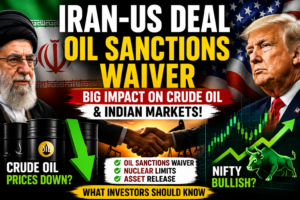
Global markets are closely watching a major geopolitical development after Iran stated that a draft agreement with the United States includes an oil sanctions waiver, limits on nuclear activities, and the release of certain frozen assets.
The development has sparked optimism across financial markets because a successful deal could increase global oil supply, reduce energy-related inflation pressures, and improve risk sentiment worldwide. For India, one of the world’s largest crude oil importers, the implications could be significant.
What Is Included in the Draft Deal?
According to Iranian officials, the proposed draft agreement reportedly includes:
- Relief from certain oil-related sanctions
- Restrictions on Iran’s nuclear activities
- Release of frozen Iranian assets
- Steps aimed at reducing regional tensions
Although negotiations are still ongoing and no final agreement has been signed, the latest developments suggest that both sides may be moving closer to a breakthrough.
Why Global Markets Are Paying Attention
Oil remains one of the most important commodities in the global economy.
If sanctions on Iranian oil exports are eased, additional crude oil could enter global markets. Higher supply generally helps stabilize prices and may reduce concerns about future energy shortages.
Lower oil prices often benefit stock markets because they reduce costs for businesses and ease inflation pressures.
Impact on Crude Oil Prices
Crude oil traders are closely monitoring the negotiations.
Possible Bullish Factors
- Reduced geopolitical tensions
- Improved global trade sentiment
- Better visibility on energy supplies
Possible Bearish Factors
- Increased Iranian oil exports
- Higher global oil availability
- Lower supply risk premium
If the agreement moves forward successfully, crude oil prices could face downward pressure in the medium term.
What Does It Mean for India?
India imports a large portion of its crude oil requirements.
Lower oil prices can provide several benefits:
1. Lower Import Costs
A decline in crude prices can reduce India’s import bill and improve external balances.
2. Inflation Relief
Cheaper energy costs can help control inflation, which may support consumer spending and economic growth.
3. Stronger Economic Outlook
Lower fuel-related expenses can improve profitability for several sectors of the economy.
Impact on Nifty and Indian Stock Market
A successful Iran-US agreement could be viewed positively by investors.
Sectors That May Benefit
Oil Marketing Companies
- Indian Oil Corporation (IOC)
- Bharat Petroleum (BPCL)
- Hindustan Petroleum (HPCL)
Lower crude prices generally improve margins for these companies.
Aviation Sector
Airlines benefit from lower aviation fuel costs.
Paint and Chemical Companies
Many raw materials are linked to crude oil prices, making lower oil prices supportive for profitability.
Logistics and Transportation
Reduced fuel expenses can improve operating margins.
Key Risk Investors Should Watch
Despite positive developments, uncertainty remains.
Investors should monitor:
- Official confirmation of the final agreement
- US policy announcements
- Oil market reaction
- Developments in the Middle East region
Any breakdown in negotiations could quickly reverse market sentiment.
Market Outlook
For now, the proposed Iran-US draft deal is being viewed as a potentially positive development for global markets.
If oil sanctions are eased and geopolitical tensions continue to decline, crude oil prices may remain under pressure, inflation concerns could soften, and Indian equities may receive additional support.
However, investors should remember that negotiations are still ongoing, and markets are likely to remain sensitive to every new headline.
https://finecodefinanceai.com/india-fastest-growing-economy-fm-sitharaman/?amp=1
Disclaimer
This article is for informational and educational purposes only and should not be considered investment advice. Investors should conduct their own research before making investment decisions.


[…] https://finecodefinanceai.com/iran-us-draft-deal-includes-oil-sanctions-waiver-impact-on-crude-oil-n… […]